How Do You Know Your Next Casting Batch Will Be as Good as the First? Your first batch looks perfect. It passes inspection, machining goes smoothly, and everyone is satisfied.
Then the next batch arrives. A few dimensions have shifted. Your machinist finds an internal cavity. Perhaps the material test results are different from the previous lot.
This is where casting quality control becomes more than a final inspection step.
For repeat production, you need a process that delivers consistent quality batch after batch. The goal isn’t simply to produce one good casting. It is to make the result predictable.
So, how can you and your foundry achieve that?
1. Start With a Clear Drawing and Specification
Quality problems often begin before the metal reaches the mould.
Your supplier needs a clear engineering drawing that defines:
- Material grade
- Critical dimensions
- Dimensional tolerances
- Machining requirements
- Surface finish
- Heat treatment
- Testing requirements
- Applicable standards
If a particular dimension is essential for assembly, identify it clearly. Don’t assume your casting manufacturer India supplier will know which measurements matter most to your application. A clear specification gives both sides the same target.
2. Approve the First Article Before Mass Production
For a new casting, don’t jump straight into a large production quantity.
A First Article Inspection (FAI) gives you an opportunity to verify the component before committing to full-scale production. Depending on your requirements, the first article may be checked for:
- Dimensions
- Material composition
- Hardness
- Mechanical properties
- Surface condition
- Machined areas
- Internal soundness
Once approved, it provides a useful reference for future batches.
However, make sure the sample is produced using the same manufacturing route intended for regular production. Otherwise, you may approve a sample that doesn’t represent normal production conditions.
3. Control Quality Throughout the Casting Process
A reliable casting quality control process doesn’t begin at final inspection.
It follows the component through the complete manufacturing chain:
Raw material → melting → moulding → pouring → cooling → fettling → heat treatment → machining → inspection
Each stage can influence the final component.
For example, inconsistent melt chemistry can affect material properties. Poor mould preparation can affect surface quality. Process variation during pouring or solidification can contribute to defects.
That is why good foundry quality control looks at the process as a whole.
4. Maintain Material Consistency
Your casting may look identical to the previous batch, but that doesn’t automatically mean the material properties are identical.
For ductile iron casting quality and cast iron casting quality, material control is particularly important.
Depending on the specified grade, you may need controls for:
- Chemical composition
- Mechanical properties
- Hardness
- Microstructure
- Heat treatment
Ask your supplier how material is verified between production heats.
You should also know what documentation will accompany the finished batch.
5. Use Casting Traceability
Imagine discovering a quality issue six months after delivery. Can your supplier tell you which batch produced the affected component? Good casting traceability makes that investigation easier. Depending on the manufacturer’s system, traceability may connect the finished casting with information such as:
Heat → batch → production date → inspection → dispatch
This becomes particularly useful for international buyers managing long supply chains.
You don’t necessarily need complicated technology.
You need a system that is accurate, consistent and actually used.
6. Choose Inspection According to the Component
There isn’t one universal casting inspection process that works for every component.
Your inspection plan should reflect the component’s function and risk.
Visual inspection
Useful for checking visible surface conditions and obvious defects.
Dimensional inspection
Confirms critical dimensions and tolerances.
Chemical analysis
Verifies the material composition.
Hardness testing
Checks whether the specified hardness range has been achieved.
Mechanical testing
Used where properties such as tensile strength or elongation are specified.
Non-destructive testing
Depending on the component, techniques such as ultrasonic, radiographic or magnetic-particle testing may be appropriate.
The important point is simple: Don’t test everything just because you can. Test what matters for your component.
7. Don't Forget What Happens After Machining
Here’s a problem buyers sometimes discover too late. A raw casting can look acceptable.
Then machining exposes a hidden cavity or another internal discontinuity.
This is why your casting quality inspection requirements should consider the final machined component where appropriate. If a bore, sealing face or heavily machined section is critical, tell your foundry before production.
Your supplier can then understand where internal soundness matters most.
8. Control Changes Between Production Batches
Your first successful batch was made using a particular process. If something important changes later, the result may change too.
For example:
- Pattern modification
- Material change
- New tooling
- Process change
- Different production route
- Significant equipment change
- These changes shouldn’t simply happen without evaluation.
Ask your supplier: What is your process when an important manufacturing change is introduced? A responsible manufacturer should have a system for reviewing and controlling such changes. This is an often-overlooked part of industrial casting quality.
9. Monitor Rejection, Rework and Recurring Problems
A foundry can learn a lot from its rejected castings. If the same defect keeps appearing, simply repairing the individual pieces isn’t enough.
You need to understand:
- What caused it?
- Why wasn’t it detected earlier?
- What will prevent it next time?
This is where corrective action becomes important. Ask your industrial casting manufacturer in India how non-conforming castings are identified, segregated, investigated and documented.A good quality system should aim to reduce recurring problems—not just repair them.
10. Look Beyond “Pass” or “Fail”
Suppose a critical dimension has an allowed range of 99.5–100.5 mm.
Three batches measure: Batch 1: 99.6 mm, Batch 2: 99.9 mm and Batch 3: 100.4 mm
Technically, all three may pass.
But the movement toward the upper limit is worth watching. For critical dimensions, tracking actual measurements can reveal process drift before it becomes a rejection.
This is a more useful approach to casting quality standards than simply marking every inspection report “OK.”
What Should You Ask Your Casting Manufacturer?
Before placing a repeat order, ask:
- How do you maintain material consistency?
- How are critical dimensions controlled?
- Do you offer First Article Inspection?
- How is each batch identified?
- Can you provide material and inspection reports?
- What happens when a casting fails inspection?
- How are corrective actions handled?
- How are tooling or process changes controlled?
- Which NDT methods are available?
- How are records maintained for future batches?
These questions tell you much more about a supplier than a certificate alone.
A Simple Buyer Checklist
Before approving repeat production, confirm:
- Approved drawing and revision
- Material grade and standard
- Critical dimensions identified
- Inspection plan agreed
- First article approved
- Material testing defined
- NDT requirements defined where necessary
- Batch traceability available
- Machining requirements confirmed
- Non-conformance procedure established
- Corrective-action process defined
- Inspection documents agreed
Keep these requirements documented with your purchase order.
It gives you and your supplier something concrete to work from.
How Can Overseas Buyers Control Casting Quality From India?
If you’re sourcing from India for projects in the USA, Europe or Middle East, distance doesn’t mean you have to compromise on quality control. Before production, agree on your drawing, material specification, inspection requirements and documentation.
Approve the first article.
Define batch traceability. Specify what reports you need before shipment. Then maintain the same requirements for subsequent orders.
The process becomes:
Specification → Production → Inspection → Traceability → Approval → Shipment
That is far more reliable than waiting until the casting reaches your warehouse to discover a problem.
Why Choose Shree Krishna Industries?
At Shree Krishna Industries, repeat casting orders require more than producing a component once.
The objective is to manufacture components that consistently meet the agreed requirements.
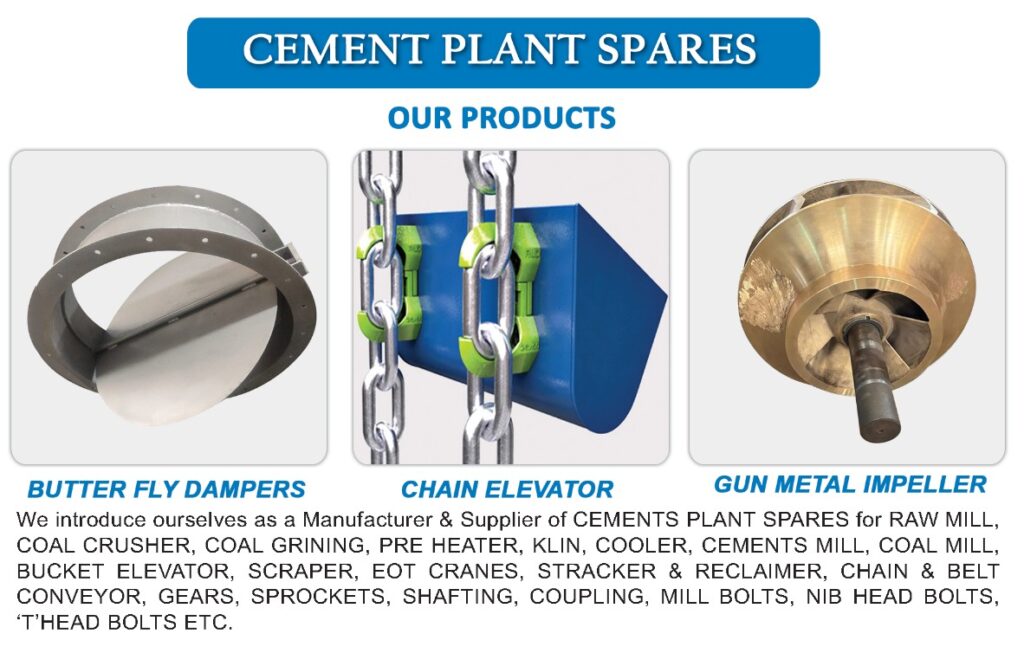
SKI works with industrial casting requirements including cast iron, ductile iron and cast steel castings, supported by foundry, pattern, laboratory, machining and fabrication capabilities.
When requesting a quotation, give us your drawing, material grade, quantity, machining requirements and inspection expectations.
The clearer your requirements are, the easier it becomes to establish the right manufacturing and inspection approach from the beginning.
The Real Test Is Repeatability
A supplier showing you one good casting is encouraging. But if you’re buying 1,000, 5,000 or 20,000 components, your real question should be: Can you make the same quality consistently? That is what effective casting quality control should achieve.
For long-term procurement, look beyond the sample. Examine the process, inspection system, traceability and corrective-action approach. Because in industrial casting, consistency isn’t a bonus. It’s what keeps your production moving.
FAQs
What is casting quality control?
It is the systematic control and inspection of materials, processes and finished castings to ensure they meet the agreed specification.
How can casting quality remain consistent between batches?
Use approved drawings, controlled processes, material verification, first-article approval, inspection plans, traceability and documented corrective actions.
What is casting traceability?
It allows a finished casting to be connected with relevant production and inspection information, such as its batch or heat number.
Does every casting require NDT?
No. The appropriate inspection method depends on the component, material, application and project requirements.
Why is first-article inspection important?
It helps confirm that the manufacturing process can produce an acceptable component before large-scale production begins.