Looking for a manhole cover for a road, airport, port or pedestrian area? The load class is one of the first things you should get right. Choosing D400 simply because it is called “heavy duty” is not enough. Your traffic conditions, installation location, clear opening, frame design and project specification all matter. So, which EN 124 manhole cover load classes should you choose?
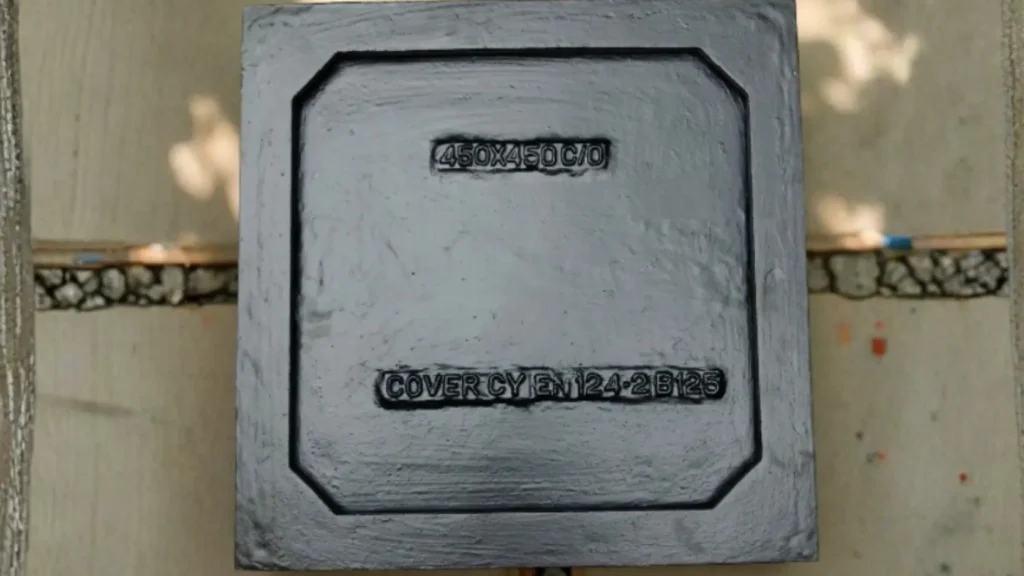
What Do EN 124 Manhole Cover Load Classes Mean?
EN 124 classifies covers and gratings according to their intended area of use and test load.
The main classes are:
Class | Test Load | Typical Application |
A15 | 15 kN | Pedestrian and cycle areas |
B125 | 125 kN | Footways, pedestrian areas and similar locations |
C250 | 250 kN | Kerbside areas and drainage channels |
D400 | 400 kN | Roads and areas carrying normal traffic |
E600 | 600 kN | Areas exposed to particularly high wheel loads |
F900 | 900 kN | Areas such as airport pavements with very high wheel loads |
These applications broadly follow the EN 124 classification system. The exact product and installation should always be checked against the project specification and applicable part of the standard.
A15 vs B125: Which One Do You Need?
A15 is generally intended for areas where vehicles are not expected to travel over the cover.
Think pedestrian walkways, cycle paths and landscaped areas.
B125 moves into locations where occasional vehicle loading can occur, such as pedestrian areas and certain car parks.
If a delivery vehicle, bus or heavy truck can regularly pass over the cover, don’t select B125 simply because the area looks like a pavement.
Ask yourself:
- “What is the heaviest vehicle that can realistically reach this cover?”
- That question can prevent an expensive specification mistake.
- When Should You Choose a C250 Manhole Cover?
C250 is commonly associated with kerbside areas, parking zones and locations near the edge of carriageways. This class is also relevant when specifying drainage gratings around areas exposed to vehicle loading.
However, don’t assume every roadside installation needs C250. The position of the cover and the actual traffic pattern matter. For a project with regular traffic directly over the cover, D400 may be the more appropriate class.
Why Is D400 So Common?
If you’re buying D400 manhole covers, you’re usually dealing with a road or traffic-bearing application. D400 has a 400 kN test load and is widely used for carriageways and areas subjected to vehicular traffic. For an international project, this is where we recommend slowing down before placing an order.
Check:
- Required load class
- Clear opening
- Frame dimensions
- Overall dimensions
- Cover type
- Hinge or locking requirement
- Surface pattern
- Drainage requirement
- Coating or finish
- Project drawing
- Required testing documentation
A cover can have the correct nominal class and still be the wrong product for your installation if the dimensions or design don’t match the project.
E600 or F900? Don't Choose by Load Number Alone
E600 manhole covers are intended for areas subject to particularly high wheel loads.
F900 manhole covers are designed for the highest class in this EN 124 series and are associated with very high-load locations such as aircraft movement areas.
That makes F900 relevant to specialist applications rather than ordinary roads.
For example, if you’re specifying covers for an airport project, the question isn’t simply:
Can you supply F900?
A better question is: Can you supply the exact F900 design, dimensions, testing and documentation required by our project? That’s the information your procurement team needs.
Ductile Iron or Cast Iron: Which Should You Specify?
For heavy-duty applications, ductile iron manhole covers are often preferred because ductile iron offers high strength relative to weight. But cast iron and ductile iron aren’t interchangeable in every specification.
Your project may already specify:
- Material grade
- Tensile strength
- Elongation
- Applicable standard
- Load class
- Coating
- Testing requirements
Some manufacturers supplying international markets list different material specifications for European and North American requirements. For example, products may be specified using EN-GJS grades for Europe or ASTM A536 grades for North America.
So if you are buying for the USA, don’t simply send an email saying Need EN 124 D400 covers. First, check what your engineer, municipality or project specification actually requires.
EN 124 for Europe vs Specifications for the USA
This is an important point for international buyers. EN 124 is widely used across European markets and many international projects. But US projects may instead call for specifications such as ASTM or AASHTO requirements, depending on the authority and application. Indian exporters serving North American markets also list ASTM-based material and load specifications alongside European requirements. For this reason, your purchase enquiry should always mention the destination country and project specification. That lets the manufacturer assess the requirement instead of guessing.
What Should Middle East Buyers Check?
For projects in the UAE, Saudi Arabia, Qatar, Oman and other Middle Eastern markets, don’t stop at the words – EN 124 compliant.
Send to the manufacturer:
- Required load class
- Clear opening
- Overall frame size
- Cover shape
- Material requirement
- Drawing, if available
- Locking requirement
- Hinge requirement
- Watertight or airtight requirement, if applicable
- Coating requirement
- Quantity
- Delivery destination
This makes the quotation much more accurate. International suppliers already market EN 124 ductile iron covers specifically for Middle Eastern distributors and projects, so buyers should expect manufacturers to work from detailed project requirements.
Your Manhole Cover Buying Checklist
Before approving a quotation, ask your supplier:
- Which EN 124 class is being supplied?
- What material grade is being used?
- What is the clear opening?
- Is the cover hinged or lockable?
- What are the cover and frame dimensions?
- Is testing documentation available?
- Is a sealing system required?
- What coating will be applied?
- Can the manufacturer follow our drawing?
- How will the products be packed for export?
This checklist is often more useful than another generic paragraph about “durability.”
What About Drainage Gratings?
The same principle applies to drainage gratings. Select a drainage grating based on where it will be installed and what loading it will experience. For example, a pedestrian drainage channel has very different requirements from a road crossing or industrial yard. As a buyer, specify the location first. Then select the appropriate load class, dimensions and grate design.
A reliable drainage grating manufacturer should be able to work from your project requirements rather than simply offering a standard catalogue item.
A Simple Example
Imagine you’re purchasing covers for a new road project. You know heavy vehicles will regularly cross the access points. Instead of saying: Please quote heavy-duty manhole covers. Give the supplier something closer to: We require ductile iron manhole covers for a road project, D400 load class, with a 600 mm clear opening. Please quote with frame, locking arrangement, coating, testing documentation and export packing. That single enquiry gives the manufacturer far more information. It also makes supplier comparison easier.
Why Your Manufacturer Matters
The load class is only one part of the product. A serious procurement decision should also consider material, casting quality, dimensional accuracy, frame fit, surface finish, locking, testing, documentation and export packaging. At Shree Krishna Industries, we understand that an international buyer is not simply purchasing a piece of cast iron. You’re purchasing a component that has to fit your project, meet its specification and arrive ready for installation.
If you have a drawing, specification or required load class, share it with our team. We can review the requirement and discuss the appropriate manhole covers and gratings for your application.
FAQs
What is the strongest EN 124 manhole cover load class?
F900 is the highest class among A15, B125, C250, D400, E600 and F900, with a 900 kN test load. It is intended for specialist areas exposed to very high wheel loads.
Is D400 suitable for road applications?
D400 is commonly used for carriageways and areas exposed to vehicular traffic. However, the final selection should follow the project’s specification and installation conditions.
Are ductile iron manhole covers better than cast iron?
Not automatically. The right choice depends on the required material specification, load class, design, application and project requirements.
What information should I send to a manhole cover manufacturer?
Send the required standard, load class, clear opening, frame dimensions, material, quantity, drawing, locking or hinge requirements, coating and delivery destination.
Can EN 124 manhole covers be supplied for US projects?
Potentially, but US projects may specify ASTM, AASHTO or other requirements instead. Always confirm the project’s governing specification before ordering.
Need the Right EN 124 Manhole Cover?
Don’t choose a cover only by its load number. Tell us where it will be installed, what load it will carry, the required dimensions and your project standard. We’ll help you identify the right specification for your requirement.